Prescriptions

Ordering repeat prescriptions

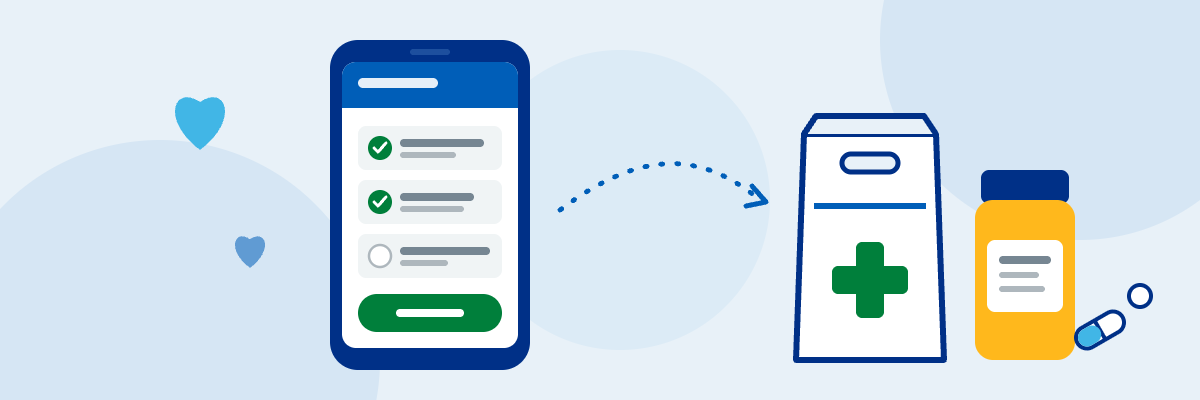
Illustration of ordering a repeat prescription on a phone and collecting it from a pharmacy

Order your repeat prescription in the NHS App

The NHS App is the quickest and easiest way to order. You can order at any time, see your list of repeat medicines and choose the pharmacy you collect from.

Order in the NHS App
Information:

Please allow 2 working days (48 working hours) for your prescription to be ready at your chosen pharmacy. This may take longer around bank holidays, so please order in plenty of time.

Important: Important

We cannot take prescription requests over the phone, and we cannot process requests while you wait.

Medication queries

Routine questions about your medicines can be sent using the link below. Please do not use this link to order repeat prescriptions.

Send a routine medication query

How to order

Online, in the NHS App

Log in to the NHS App and choose Prescriptions. You will see the repeat medicines your GP has agreed, and you can tick the ones you need.

New to the NHS App? The NHS website explains how to order prescriptions in the NHS App.


In person or in writing

You can hand in a written request at the practice. Either tick the items you need on the right-hand side of your last prescription, or write a note with your name, date of birth and the medicines you need.

Collecting your medicine

We use the Electronic Prescription Service, so your prescription is sent straight to the pharmacy you have chosen. You do not need to come to the surgery to collect it.

Help with your prescription

If you are running low or have run out

Please order at least 2 working days before you run out.

If you have run out of a medicine you need urgently, speak to your usual pharmacy. A pharmacist may be able to give you an emergency supply. When the practice is closed, call NHS 111.


Help with prescription costs

More information

Medication reviews

Many medicines need regular monitoring by your GP or hospital consultant. We will invite you for blood tests or a medication review when you are due.

Please book as soon as you can after you are invited. If your review or monitoring is overdue, we may not be able to issue further prescriptions until it has been done.


Medicines recommended by a hospital or specialist

If a hospital or specialist asks us to start or change a medicine, we need to receive and review their letter first. Please allow time for this before you request the new medicine.


Medicines you can buy from a pharmacy

For many minor conditions, medicines are available to buy from a pharmacy without a prescription, often for less than the prescription charge. A pharmacist can advise you. See Who do I see? and how pharmacies can help.


Why we do not prescribe diazepam for fear of flying or dental procedures

We do not prescribe diazepam or similar sedatives for fear of flying or for dental procedures. The reasons are explained below.

Fear of flying

Our concerns around using diazepam in patient who are nervous about flying are as follows:

  • Diazepam is a sedative, which means it makes you sleepy, more relaxed and can significantly delay your reaction times. If there is an emergency during the flight it may impair your ability to concentrate, follow instructions and react to the situation.
  • Sedative drugs can make you fall asleep, however when you do sleep it is an unnatural (non-REM) sleep. This means you won’t move around as much as during natural sleep. There is concern this can cause you to be at increased risk of developing a blood clot (DVT) in the leg or even the lung which can be dangerous. This risk is greater if your flight is greater than four hours.
  • Whilst most people find sedative medications like diazepam have a relaxing effect, a small number of people can actually feel more agitated or even aggressive after taking it. Diazepam can also cause disinhibition and lead you to behave in a way that you would not normally.
  • Prescribing guidelines doctors follow (known as the BNF), don’t recommend using benzodiazepines like diazepam in phobias. We would be acting against these guidelines if we prescribe.
  • Diazepam and similar drugs are illegal in several countries. They may be confiscated, or you may find yourself in trouble with the police if you are carrying any on arrival.
  • Diazepam stays in your system for quite a while. If your job requires you to submit to random drug testing, you may fail this having taken diazepam.

We appreciate that fear of flying is very real and very frightening. A lower risk approach is to tackle this properly and hopefully permanently, with a Fear of Flying course run by the airlines and we have listed a number of these below or there are also some free online courses:

Dental procedures

If you need sedation for dental treatment, your dentist is responsible for prescribing it.

Dentists should not direct patients to GPs requesting they prescribes sedating medications, such as diazepam.

If a dentist wishes to prescribe sedating medications for anxious patients that dentist should be responsible for issuing the prescription. The dental practitioner’s formulary, which is the list of drugs a dentist can prescribe is found on the BNF dental practitioners formulary, includes Diazepam Tablets and Oral Solution.

If the dentist is treating a patient within their practice NHS contract, then the prescription should be on a FP14D form. Dentists do not have EPS.

If the dentist is treating a patient privately, they should issue a private prescription.

Dentists may contact a GP for information or advice, if, for example the patient has a complex medical history.